
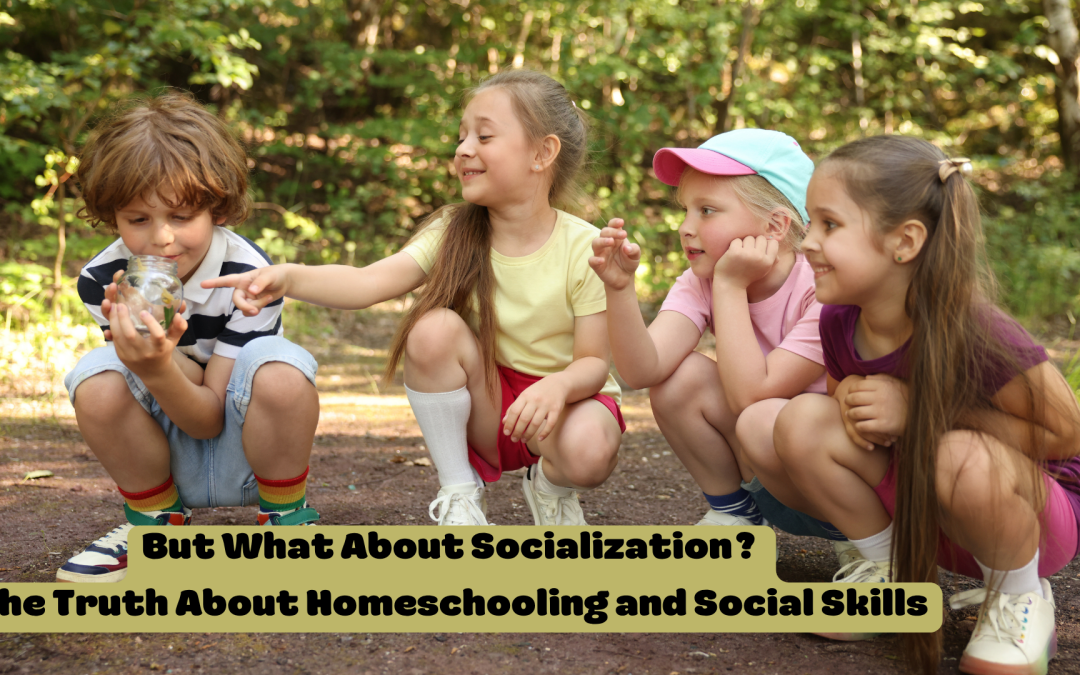
Tell someone you’re homeschooling your child and there’s a good chance you’ll eventually hear the question:
“But what about socialization?”
It’s one of the most common concerns families hear about homeschooling.
The assumption is understandable. Traditional students spend much of their day surrounded by classmates.
But being surrounded by people isn’t automatically the same as developing healthy social skills.
Socialization is about learning how to communicate, cooperate, build relationships, handle disagreements, and interact with different kinds of people.
Those skills can develop in many environments.
Homeschool Doesn’t Mean Staying Home
The word “homeschool” can create an inaccurate picture of a student sitting alone at the kitchen table every day.
For many families, nothing could be further from reality.
Homeschool students may participate in sports, clubs, church activities, volunteer organizations, music programs, community classes, co-ops, field trips, and countless other activities.
Homeschooling can actually give families greater control over which social opportunities they pursue.
Look Beyond Same-Age Friendships
Traditional classrooms generally group students according to age.
Real life doesn’t.
Adults interact with people who are younger, older, and from different backgrounds every day.
Homeschool students may have opportunities to interact with a broader range of ages through community activities, family relationships, volunteering, sports, and other experiences.
These interactions can help students learn how to communicate comfortably with different people.
Quality Matters More Than Quantity
A student doesn’t necessarily need dozens of friends to have a healthy social life.
Some children enjoy large groups.
Others prefer two or three close friendships.
Parents should pay attention to what their individual child needs rather than comparing their social life with someone else’s.
Activities Can Be Built Around Interests
One of the easiest ways to help students form friendships is to connect them with others who share their interests.
Does your child enjoy soccer?
Theater?
Robotics?
Gaming?
Dance?
Art?
Horses?
Music?
Volunteering?
Shared activities naturally give students something to talk about and can make forming friendships easier.
Social Skills Begin at Home
Some of the most important social skills are practiced within families.
Students learn to compromise, communicate, apologize, share responsibilities, resolve conflicts, listen, and show respect.
These everyday interactions are part of social development too.
Be Intentional
Social opportunities may not happen automatically when homeschooling.
Families sometimes need to seek them out.
Look for local homeschool groups, recreational programs, community organizations, libraries, sports leagues, churches, clubs, and volunteer opportunities.
If your student says they’re lonely, take that seriously and look for additional ways to help them connect.
Homeschooling Can Be Social
Education doesn’t have to happen in a traditional classroom for students to develop meaningful relationships and strong social skills.
With intentional opportunities, homeschool students can build friendships, participate in their communities, and interact with people from many different backgrounds.
And because online curriculum can offer scheduling flexibility, families may have greater freedom to incorporate activities and experiences into the school week.
Global Student Network helps families explore flexible online curriculum options that can become part of a homeschool experience designed around the whole student.
Discover flexible online curriculum options through Global Student Network and build a homeschool experience that fits your student’s academic and personal needs.